News

Latest news and updates from our company

Shandong Luwei has received numerous awards and honors.
2026-03-27

Shandong Luwei has received numerous awards and honors.

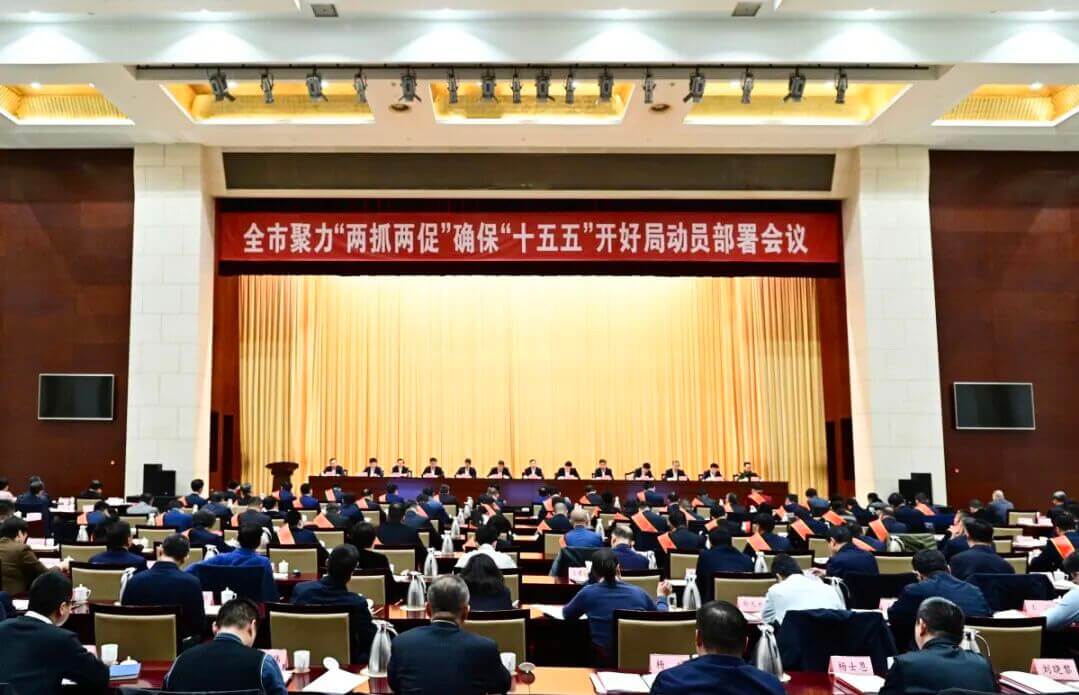
On February 26, 2026, at the Zibo City's "First Meeting of the New Year"—a city-wide mobilization and deployment meeting to focus on "two grasps and two promotions" to ensure a good start to the "15th Five-Year Plan"—Shandong Luwei Pharmaceutical, based on its outstanding performance and significant social contributions, won two important honors: "2025 Zibo Top 100 Enterprises" and "2025 Zibo Top 100 Manufacturing Enterprises." This marks the fifth consecutive year that Shandong Luwei Pharmaceutical has been included on this list. General Manager Feng Shuai of the Group was awarded the title of "Advanced Individual in Zibo City's 'Striving for Economic Development, Comparing Contributions, and Judging Results'." On February 27, Zichuan District held a mobilization and deployment meeting to focus on "two grasps and two promotions" to ensure a good start to the "15th Five-Year Plan." At the meeting, Shandong Luwei Pharmaceutical received the honors of "Outstanding Enterprise in the District's Stable Economic Growth" and "Outstanding Enterprise in the District's Local Fiscal Performance." General Manager Feng Shuai of the Group delivered a speech at the meeting on the theme of "Seizing Opportunities to Promote Industrial Transformation and Strengthening Work Style to Improve Efficiency." 2026 marks the start of the 15th Five-Year Plan and is a crucial year for Shandong Luwei Pharmaceutical to further advance its "project development and growth" strategy. We will take this as a new starting point, continuing to uphold the concepts of innovation-driven and green development, and comprehensively complete the construction of five core economic sectors: a vitamin C raw powder production base, a green, low-carbon, and circular economy industrial base, an energy supply base, a corn deep-processing industrial base, and a railway logistics base. We will accelerate the construction of a new pattern of full-industry chain development. We will strive to build a world-class vitamin C full-industry chain production demonstration base, explore and form the "Luwei Model" of green, low-carbon, and high-quality development, and contribute Luwei's strength to the city's high-quality economic development.

Read More
Shandong Luwei held its 2025 annual work summary meeting.
2026-03-27

Shandong Luwei held its 2025 annual work summary meeting.

On February 9, 2026, Shandong Luwei held its 2025 Annual Work Summary Meeting. The meeting comprehensively summarized the work of the past year and arranged and deployed the work tasks for 2026. Mr. Feng Yanming, Chairman of Shandong Luwei, attended the meeting and delivered a speech. General Manager Feng Shuai presented the Group's 2025 Annual Work Summary Report. Vice General Managers in charge of various departments, deputy directors and above of workshops in various branches, managers and above of logistics departments, and outstanding employees of 2025 attended the meeting. At the meeting, heads of units (departments) such as the VC Business Unit's Branch Plant 1, Power Plant, Materials Department, Human Resources Department, and Production Technology Department reported on their 2025 work summaries and key work plans for 2026. Awards were presented to "Advanced Units," "Outstanding Management Cadres," and "Outstanding Employees" of 2025. General Manager Feng Shuai delivered the "2025 Work Summary and 2026 Key Work Plan" report. The report points out that in 2025, facing multiple challenges including downward pressure on the external economy, Sino-US trade frictions, and global market intensification, under the strong leadership of the Chairman, the entire Group rose to the challenge and overcame difficulties together, maintaining overall healthy and stable economic operation and completing all target tasks. Major projects such as the 50,000 kW back-pressure unit cogeneration project progressed smoothly, the overall safety and environmental situation remained stable, and new breakthroughs were achieved in corporate honors, number of patents, and brand influence. Regarding the main directions and strategies for future work, the report indicates that Shandong Luwei has designated 2026 as the "Year of Safe Production," "Year of Quality Management," "Year of Cost Control," "Year of Market Expansion," and "Year of Style Construction," setting clear goals and tasks. It emphasizes the need for overall planning and simultaneous efforts, strengthening the market awareness of all employees, serving and supporting core work, and ensuring accountability at all levels to promote refined management and effective work style. Chairman Feng Yanming delivered a concluding speech, fully affirming the hard-won achievements of the Group in the past year amidst difficulties and expressing heartfelt gratitude to all cadres and employees for their hard work. The Chairman emphasized that 2026 is a crucial year for the Group's leapfrog development. Faced with increasingly fierce market competition, we must maintain strategic focus and persevere with unwavering determination, comprehensively strengthening safety, quality, cost control, market presence, and work style. We must turn crisis into opportunity and pressure into motivation, ensuring the high-quality achievement of annual targets and injecting strong momentum into the grand vision of "10 billion RMB Luwei, a century-old Luwei." Seeking dreams across mountains and seas, we are not afraid of the distance; the road ahead may be bumpy, but together we will reach our destination. In 2026, the entire company will stay focused on its goals, strengthen its confidence, and sound the clarion call for progress with practical action and dedication, striving to write a new chapter in the company's high-quality development.

Read More
Shandong Luwei Food Safety Work Survey
2026-03-27

Shandong Luwei Food Safety Work Survey

On December 30, 2025, Guo Qing, member of the Municipal Government Party Group and Vice Mayor, and his delegation visited Luwei Pharmaceutical to conduct in-depth research on the implementation of the main responsibility for food safety and to explain the spirit of the Fourth Plenary Session of the 20th CPC Central Committee. Huang Meng, Deputy Director of the Municipal Government Office; Guo Yihua, Secretary of the Party Group and Director of the Municipal Market Supervision Administration; Jing Gang, member of the Party Group and Deputy Director of the Municipal Market Supervision Administration; Wang Lin, Deputy District Mayor; Wang Hongzheng, Secretary of the Shuangyang Town Party Committee; Zhang Xue, Director of the District Market Supervision Administration; Mr. Feng Yanming, Chairman of the Board of Directors of the company; and Mr. Feng Shuai, General Manager, participated in the event. General Manager Feng Shuai gave a detailed report on the company's various measures in fulfilling its main responsibility for food safety and the company's economic operation, and also reported on Luwei Pharmaceutical's "15th Five-Year Plan" development plan. Vice Mayor Guo Qing fully affirmed Luwei Pharmaceutical's food safety work. He emphasized that enterprises must attach great importance to food safety and product quality, ensure that systems are implemented effectively, and maintain standardized and rigorous management. Food safety and product quality are both a red line and a bottom line. He hoped that the company would continue to play a leading role, continuously improve its food safety management level, and build a quality brand. Following this, Vice Mayor Guo Qing explained the spirit of the Fourth Plenary Session of the 20th CPC Central Committee to representatives of the company's Party members and key business personnel, and offered many practical opinions and suggestions based on the group's development. Luwei Pharmaceutical will take this research and explanation activity as an opportunity to further strengthen the company's awareness of studying and implementing the spirit of the Fourth Plenary Session of the 20th CPC Central Committee, encourage the group's cadres and employees to work hard and strive for excellence, and dedicate themselves to all aspects of the group's work with higher standards and requirements, contributing Luwei's strength to promoting the high-quality economic and social development of the city.

Read More
Luwei Pharmaceutical Group Co., Ltd
2026-03-27

Luwei Pharmaceutical Group Co., Ltd

Manufacturing in the pharmaceutical world today asks for more than scale or speed. As someone on the shop floor watching batches leave our facility at Luwei Pharmaceutical Group, the real work comes down to trust and detail. Regulations pile up, inspections grow keener, but every shipment carries our name. Whenever clients ask about raw material sourcing, traceability, or batch records, it’s not a check-the-box exercise. Years ago, sourcing locally meant dealing with inconsistent quality, and supply shocks hit everyone. Now, our material vetting routines run deep—far beyond simple audits. We maintain repeat dialogues with upstream farms and chemical processers to trace even seasonal changes in the supply. That keeps our inventory honest and our formulations true, especially for customers demanding the tightest standards for feed and food additives. Big headlines sometimes spotlight sudden breakthroughs in powder drying or crystallization, but real process improvement inside a pharmaceutical plant means picking through variables every step of the way. Machines from Europe and Japan look impressive, but integration never happens in a vacuum. Our engineers spent nights recalibrating a new spray-dryer, only to see yields drop for weeks. Tightening humidity control ended up saving more money over a year-long stretch than any glossy brand-new unit. We share these stories with our customers and regulators because performance on paper never tells the full story. The process must run consistently under practical, real-world conditions. Seasoned production teams catch flaws that software cannot. Newer colleagues pick up lessons not in manuals, but on the line. Retaining these insights keeps us ahead, not just installing the latest steel tanks or robotic arms.It might look from the outside like compliance is just about paperwork. Once you start compiling dossiers for multiple markets, the complexity eats up time by the week. Chinese registration isn’t the same as Europe’s rules or the shifting US landscape. Our QA department grew out of a need to face unplanned spot-checks, not because we feared them, but because every plant visit brings new questions. Every audit peels back how well we manage cross-contamination, track impurity profiles, and control environmental emissions. There’s no shortcut—missing one detail can shut down production. We talk to representatives from different agencies throughout the year, each pushing us to reconsider water recycling, energy use, and even old warehouse storage practices. Following the strictest standard, even when it’s only “recommended,” doesn’t just earn a certificate. It means when regulatory investigators call, we open every door, knowing we did not gamble on the basics.The pharmaceutical supply chain has grown global, and so have expectations for cost-competitiveness. The challenge doesn’t just come from labs outside China. Years ago, just being large served as a shield, but now manufacturers in every country push efficiency harder. We measure output per worker, machine uptime, and even the amount of rejected product each shift produces. Each excess kilo of waste adds up to a hard cost, so we’ve built a culture where operators propose process tweaks directly. No consultant understands a line better than the man who clocks in at dawn. Whenever the market swings—whether through API shortages or distributor upheavals—our team’s momentum matters more than press releases or sponsorships at trade fairs. We’re not immune to higher input prices or global shipping chaos, but pulling together daily, tracking root causes of downtime, and reinvesting savings direct from production floors sets the tone for real resilience.Every industry loves to claim quality, but it takes years for a manufacturer to earn unwavering trust. At Luwei, single errors are not erased by apologies or revised SOPs. We’ve seen what happens when end users catch a missing specification or detect extraneous substances. Our packaging lines get double-checked on days when demand spikes. Each inspector flags even faint deviations, because customer confidence can evaporate after one incident. The reality is, our oldest contracts renew because we answer complaints with improvements, not explanations. When a customer asks for a new certificate or wishes to inspect our warehouse (in person or over a video call), we accommodate without hesitation. No shortcut substitutes for daily process checks and high expectations set by every supervisor—from the raw goods unloading dock down to final release. Years of zero-complaint records are built on vigilance, not slogans.Sustainability matters, not because investors or international buyers demand it, but because our own towns rely on clean water, air, and jobs grounded in honest practice. Over the last decade, our wastewater controls evolved from basic holding ponds to multi-stage filtration. Borrowing methods from food processing, we recover solvents and reduce energy waste throughout the year. We work with local communities to monitor soil and river health, keeping pollution targets real, not theoretical. Our shift to greener chemistry gets real support because the teams handling chemicals daily value longevity. Every cost cut from resource conservation turns into higher wages and safer working conditions. Change did not come all at once—meetings get heated about upgrades and investment cycles. Still, supporting families in factories, schools, and streets near our site means owning up to environmental responsibility. Healthy local relationships are as vital as global benchmarks.Every month, we speak directly with buyers who use our ingredients in finished formulations. They ask for technical support, troubleshooting, and sometimes just a straightforward answer about shipping delays or API equivalence. We share challenges when typhoons delay port clearance or if supply chain revolutions force substitutions on short notice. Trust grows not from being the cheapest option, but from delivering on commitments—even if it means saying no to over-promising. Our technical teams work with R&D on the client’s side, developing tailored approaches for new regulations or formulation shifts. More than once, joint pilot programs led to breakthroughs neither side expected. These shared journeys anchor our collaborations deeper than price negotiations or yearly tender processes. In the pharmaceutical world, consistency and personal accountability define partnership, not glossy brochures or exhibition booths. In this business, resting on past achievements guarantees nothing. Every year, the playbook changes—whether that’s due to shifting disease profiles, tighter import controls, or the speed at which digital systems reshape batch management. We learn constantly, through setbacks and occasional surprises. Our plant modernized its digital tracking after losing hours to manual paperwork—training older supervisors meant slowing down at first, but accuracy and recall improved far faster than expected. We balance long-term plans with the need for flexibility. The healthiest companies revisit assumptions about process, logistics, and technology while keeping their core values intact. As a manufacturer, our success stands or falls with the discipline we show on days when short-term stress threatens our standards. Growth does not erase responsibility—it magnifies it. Tenacity, openness, and skill-building set our compass for tomorrow’s challenges.

Read More
Shandong Ruixi Machinery Equipment Installation Co., Ltd.
2026-03-27

Shandong Ruixi Machinery Equipment Installation Co., Ltd.

Working in chemical manufacturing often highlights just how much we depend on those who supply and install our process equipment. Every pipeline, reactor, pump, and control system in our facility tells a story—usually, a story reliant on the careful work of experienced installation specialists. Shandong Ruixi Machinery Equipment Installation Co., Ltd. continues to stand out in that arena, not just because of their technical skills, but because their people understand the day-to-day realities inside a plant like ours. For chemical production, where downtime carries heavy financial penalties and every deviation in a batch could mean lost product or even a safety risk, trusted installers make a real difference. Shandong Ruixi’s teams aren’t afraid to deal with practical issues that arise mid-project and keep a focus on the long-term operability of whatever they build. Their welders stay consistent, installation supervisors show up on time, and our engineers don’t have to babysit each step. This level of reliability rarely makes it into press releases, but on the shop floor, you know who you can call during a blackout, a valve alignment problem, or a midnight compressor vibration incident.We’ve seen a shift in recent years, with more stringent safety standards and operational efficiency demands driving up expectations for everyone working in industrial construction and installation. As a manufacturer, it’s not enough for our equipment to meet design specs on paper. Technicians need to know how real-world chemical processes behave, including the ways temperature cycles cause expansion and contraction, or how dust and residue will test the integrity of a connection. Ruixi brings a depth of field experience that cuts through design assumptions, identifying and correcting potential pinch points before they become headaches. Our biggest maintenance wins come from this type of practical thinking: placing valves within reach, labeling lines with clarity, bracing piping under likely vibration loads. Outdated or rushed installations can introduce long-term costs that accounting rarely spots up front—things like premature gasket failures, mixing inefficiencies, or unplanned shutdowns. Avoiding these pitfalls means respecting both engineering drawings and the idiosyncrasies of real production environments. Partnering with an installer who acknowledges both factors sets us apart in safety audits, reliability KPIs, and ultimately our ability to deliver high-quality chemicals to customers.Supply chain disruptions and energy price fluctuations challenge everyone these days, but installation remains a linchpin. Whenever we upgrade or retrofit a system, time weighs heavily because pausing even one line can disrupt customer deliveries or force us to scrap semi-finished batches. Many contractors battle labor shortages or struggle to source specialty materials, yet Ruixi seems to set realistic timelines and stick to them. Mistakes or delays in installation often translate to lost profit, regulatory headaches, or risks to our workforce. Each modification or new system connects directly to pressure vessels, hazardous chemical feeds, and automation controls. Having a partner that brings not only technical skill but reliable logistics brings peace of mind. The difference between a smooth startup and a costly incident usually traces back to the skill and discipline of the installation crew.Environmental and social responsibility claims mean little unless companies back them up with their actions. We’ve noticed that Ruixi coordinates proactively on containment solutions, proper waste handling, and emission reduction steps during installation, not as an afterthought but as part of project planning. This mindset aligns well with our own growing commitments: zero liquid discharge targets, accident prevention, and operational transparency. In the past, installers left management to sort environmental compliance out after final handover. Now, partners like Ruixi make sure containment berms fit properly, flare connections meet code, and all bolt-ups support quick response for leak detection. These efforts protect more than just permits; they keep our workers and neighbors safer and strengthen our social license to operate.Factory owners face increasing pressure to improve both productivity and safety year on year. We produce chemicals for many different industries, so our operations run nearly around the clock. The smallest oversight in installation can mean bad news for product quality or the safety of those operating equipment twelve-hour shifts. Sometimes, inexpensive or poorly coordinated installations cause recurring bottlenecks—like a pump base poured too thin, forcing us to schedule downtime for repairs. Fast fixes may work once, but don’t last. Our line leaders and maintenance techs value the care Ruixi takes in their work. Operational knowledge isn’t just a slogan. Our process improvement records show that plants with properly installed systems see fewer trips, easier cleaning, and safer entries when it’s time for shutdowns. This translates into lower costs and a more motivated crew, two outcomes we’re always chasing.The value of skilled installation multiplies with every dollar spent modernizing facilities. Chemical manufacturing isn’t static—new catalysts, higher flow rates, tighter process windows, and tougher environmental rules all push us to adapt. Over the past decade, sites that invest in top-tier mechanical installation see more uptime and smoother integrations of new technology. Ruixi’s people respect legacy systems but don’t shy away from suggesting changes that make long-term sense. That attitude pairs well with the way we approach upgrades: cautious where heritage infrastructure limits us, but progressive where new value can be unlocked. Our joint projects with Ruixi have not only run closer to planned budgets, they also perform more predictably year after year.Throughout our years in the industry, trust remains the currency of progress. We know every installation project can run into trouble: late material shipments, hidden corrosion, sudden weather swings, or design changes halfway through construction. Our experience with Ruixi underscores the importance of open communication, experienced project managers, and a willingness to correct course when things don’t go as planned. Strong relationships across the supply chain don’t eliminate risk but they compress response times and make recovery quicker. We’ve seen that companies who treat each install as only a one-off transaction rarely last. Building a track record of safety, reliability, technical competence, and transparent dealings turns partners into allies, not just vendors. For those of us who work every day to keep chemical plants productive and safe, that kind of partnership counts for a lot—and it shapes the way we choose who to work with, now and in the years to come.

Read More
shandong luwei machinery co ltd
2026-03-27

shandong luwei machinery co ltd

Here in the line of chemical manufacturing, it’s impossible to ignore the buzz around Shandong Luwei Machinery Co Ltd. Some of us spend entire careers surrounded by the machines they send out. Their silos, dust collectors, and mixing equipment occupy a critical place in modern chemical and construction projects. Working with their silos, you notice the build-quality does not cheat the client. Materials feel solid, welds hold up even after demanding loads, seals barely leak even when battling aggressive powders and fluctuating temperatures. Operators appreciate this because cheap welds split, dust gets everywhere, and downtime eats into margins and deadlines. In an industry where weather, humidity, raw material inconsistencies, and heavy wear gnaw at even the best engineering, reliability doesn’t always mean glitz — it comes from the plain dependability of day-to-day operation.From experience, it’s clear Shandong Luwei’s approach to rapid assembly and modular upgrades has direct impact on the bottom line. Some crews look for fast set-up times, especially for projects in remote spots or sites with shifting demands. Producers appreciate not wasting three extra days getting a storage bin online. In the real world, every day saved can shave real cost, especially under penalty clauses or customer deadlines. Our own process managers learned the hard way what happens when rain hits and the mixing plant sits idle because a third-party weld failed or some clumsy design idea took hours to rectify on site. Luwei’s bolt-together approach and standardized sections shorten those hours, keep the project running, minimize risk of accidents, and cut costly standstills.No chemical plant can ignore environmental regulations, as fines and shutdowns draw blood fast. Working around Luwei’s dust collection systems for years, they prove the difference between headline-grabbing complaints and smooth inspections from authorities. Upgrades to pulse-jet filters and better sealing gaskets show up in the daily air readings and reduced hand-sweeping on warehouse floors. Skilled teams know which models cause more headaches and which keep inspectors satisfied. The company’s willingness to adapt designs to more stringent controls has made it easier to hit compliance, reducing time spent constantly re-engineering or cleaning to pass audits. That experience reinforces why investing in solid environmental controls pays dividends well beyond peace of mind.Longevity in equipment gives the biggest predictor of value. Some machines limp along for a handful of years before becoming expensive lawn art. Consistent maintenance logs in our operation reveal Luwei machinery often outlasts the cheaper imports that look similar at first. From the plant director’s view, parts availability matters as much as initial purchase price. Sourcing a replacement auger, gearbox, or valve without a three-week delay means keeping processes steady and orders on time. Luwei’s local presence and after-sales service in key markets inform daily maintenance decisions. People on the ground notice fewer lost hours—sometimes a hidden saver greater than anything in the spec sheet.Staying competitive as a manufacturer involves more than just churning out chemicals. Machinery investment counts toward energy costs, labor efficiency, and safety incidents. Luwei pays attention to safety features, making access ladders, platforms, and confined space entry points more robust. No one in this business enjoys a safety incident’s fallout—the cost, the paperwork, the strain on teams—and practical steps in equipment design show respect for the workers. In our experience, easier access for cleaning, repair, and inspection makes an impact. Day-to-day operators recognize when manufacturers cut corners or, instead, take time to consider where and how real work gets done. Sometimes the smallest details in a silo stair or control panel marking can spell the difference between a near-miss and a routine shift.Cost management in chemical manufacturing always feels tight. Price pressure drives some to chase the lowest bid, but tools and machines that hold up across production runs, maintenance cycles, and inspections ultimately prove their worth. Choosing equipment from Shandong Luwei has taught us that the cheapest approach can cost more in headaches, delayed runs, and regulatory trouble. Insights gained from years of installation, operation, and maintenance shape how we judge partners in the supply chain. Companies willing to grow alongside changing regulations and customer needs keep their partners in business, rather than offering only off-the-rack solutions. A manufacturer willing to learn from real-world feedback stands out, and that’s an edge that no catalog photo or award can replace.On the production side, adapting to customer demand and new product lines requires flexibility and smart investments. We’ve faced situations where production spikes or shifts in formula needed extra bins or dust control extensions practically overnight. Watching our engineering team bolt on new sections in hours—not days—offers undeniable relief when pressure rises. Well-designed, scalable equipment makes a difference to staff morale and project flow. In heavy industry, real innovations don’t always look dramatic, but they save time, cut risk, and provide confidence across the operation.New competition, steeper regulations, and fluctuating demand all challenge the industry. Looking at the machinery, the companies who genuinely partner with producers, listen to feedback, and deliver responsive service rise above the noise. Real proof lies not in brochures or trade show booths, but in the way equipment handles abuse, adapts to shifting projects, and survives the grind of daily operation. No one appreciates this more than the people who touch the machinery, log the hours, and fix the surprises that pop up after the sales pitch ends. Experience on the ground challenges every manufacturer to do better, and the companies that listen—like Shandong Luwei—help shape our industry’s future.

Read More
Luwei Pharmaceutical Group Co. Ltd Ascorbic Acid
2026-03-27

Luwei Pharmaceutical Group Co. Ltd Ascorbic Acid

 Working in the field of pharmaceutical chemical manufacturing for decades, we can speak frankly about the practical challenges, global expectations, and the underlying facts that drive the ascorbic acid industry. Luwei Pharmaceutical Group, like other major producers, does not simply churn out bulk Vitamin C by rote. Stringent regulations, supply chain dynamics, and persistent price competition shape every aspect of daily production. Consistent quality starts with fermentation feedstock—largely corn-based materials transformed by microbial processes. Quality begins at raw input; poor sourcing tips the product into waste, triggers excessive treatment, or even results in a batch recall. Everybody wants purity, but purity grows costly the moment energy or feed prices spike. We cannot ignore these issues since synthetic ascorbic acid does not simply drop out of a reactor. Meticulous monitoring tracks parameters from dissolved oxygen to color, ash content, and particulate load. Every additional filth test, every clocked hour of HPLC analysis means added cost, but customers tolerate no shortcuts. Experience over years has shown that market expectations for bulk Vitamin C off the line remain high, but end users—whether vitamin tableters or beverage formulators—rarely see the workload or investment behind those white crystals. Production lines must adapt to shifting government policies, fluctuating anti-dumping investigations, and demands for traceability, often in ways outsiders overlook. Several years ago, stepped-up European oversight forced massive overhauls to data documentation systems for our ascorbic acid. Batch traceability eats hours from qualified technician time, technical document arrays swell, and the cost per kilogram increases. We still remember the scramble when mandatory electron beam sterilization became the standard—sudden investment, retraining, and the uncertainty whether new polymer bags could withstand the treatment without leaching compounds that would ruin an entire shipment. One slip can set back an entire quarterly target.  When news stories or end-user bulletins highlight Luwei Pharmaceutical Group’s prominence, they pull back the curtain just a little. Scale counts. Global output of synthetic Vitamin C concentrates in fewer hands than much of the public realizes. Even established local pharmaceutical brands, sports nutrition producers, or food factories depend on shipments from several big Chinese producers, with Luwei firmly in that circle. Major multinationals rise and fall on the reliability of consistent ascorbic acid—from the crystalline powder in a 25kg sack to the sometimes underestimated mixing batch in a soft drink line. Downstream customers depend on clear records and prompt responses. Audit trails now track every consignment from the silo to the longitude and latitude of the recipient warehouse. Decades ago, spreadsheets and stamped paper sufficed. Today, cloud tracking, electronic signature chains, and rapid-response quality teams are mandatory for access to the export market. Auditors want facility photographs, batch logs, and reformulation justifications without delay. We have learned that keeping relationships honest proves wise in the long run. End users want answers for every trace impurity: why a shipment reads a touch higher in moisture than the last, why a faint off-odor appeared, or why a particle size range shifted by a micron. Full transparency fosters repeat business, but meeting these expectations draws on technical staff, retraining, and deeper collaborations with logistics firms under increasing customs scrutiny. If a consignment misses stated heavy metals limits or fails peroxides, both manufacturer and buyer feel the economic shock. Insurance premiums rise, repeat testing eats margin, and the regulatory glare intensifies. China’s food additive producers—Luwei among them—absorb this pressure, knowing one publicized recall from a major Western brand leads to months of contractual back-and-forth, long after the product reaches global retail shelves.  From inside the factory, you see that real manufacturing value builds on raw determination, a steady hand with analytics, and patience through volatile markets. News headlines regularly cite the scale of Chinese ascorbic acid production. Behind those numbers: 24-hour production runs, surprise inspections by national authorities, and periodic overhauls to meet the most current editions of the Chinese Pharmacopoeia or international food codex. Each change means more process control, longer downtime for reactor cleaning, revised batch records, and extra testing. The public rarely factors in the effort poured into batch consistency—especially critical in ascorbic acid since so much lands in health products where regulatory claims tie closely to demonstrated potency. Raw material shortages press on the schedule. Utility disruptions—water, electricity, steam—can turn a profitable line into a liability with a few hours’ notice. Few outside chemical manufacturing grasp how often we reevaluate our cleaning protocols or safety barriers when customer complaints mount over “off-spec” physical properties. In recent years, all major producers received pressure from big-name multinationals demanding not just purity, but tailor-made attributes that match specific tablet presses, blending lines, or packaging equipment. The shift toward specialty grades signals how much value customers place in process reliability, and how flexible a manufacturer like ours must remain. Innovation matters, but so does a willingness to reformulate, scale up or down quickly, and sacrifice margin to win a loyal customer, particularly when competing with both domestic and overseas rivals who aim to undercut on price.  Quality alone cannot keep pace with changing international priorities. Sustainability emerged as both a challenge and a selling point. Down every corridor in our plant, teams hunt for ways to recover heat, reuse process water, or reclaim residual byproducts from fermentation. Our experience tells us that these efforts require real investment, not token gestures. Regulators scrutinize carbon footprints, and downstream brands increasingly demand a full accounting for environmental impact. Switching to greener solvents, investing in modern energy-efficient fermenters, and adopting advanced filtration sometimes pay off in market credibility, but these changes roll out over years. Local authorities grant certifications after long documentation reviews, and export customers examine them closely. In practice, the push to minimize environmental burdens often links directly back to brand acceptance in stricter markets such as the EU or Japan. High energy prices push us to reconsider the process, optimize every pressure gauge and valve setting, and seek power purchase agreements to stabilize cost forecasts. The worldwide focus on trace contaminants, allergen control, and food safety shows no sign of easing. Consumers want to trust every bottle or packet of ascorbic acid, either as a supplement or as a food ingredient. A single supply chain misstep—whether in quality or reputation—expands to impact every customer using Luwei’s product. Practical experience confirms that relations with local authorities, willingness to facilitate open audits, and investment in continuous plant upgrades do more to secure future business than simply boasting about ISO certificates or GMP registrations. Experienced chemists, technical teams, and plant supervisors who understand the reality of compliance—all representing years of accumulated expertise—ensure that every new ton leaving the plant meets expectations set not by marketing brochures but by years of audit, government inspection, and customer feedback.  Meeting tough international standards while maintaining efficiency and reliability takes discipline and pride in the work. The most effective improvements arise from line operators, R&D teams, and those close to the raw feedstock, not from abstract boardroom planning. Daily shifts prioritize consistent safety, regular staff training, and process checks that adapt to new technical challenges—often driven by customer demand for higher purity or specialty forms. Early investment in online monitoring systems and in-depth batch analytics allows us to correct drift before it turns into a shipment deviation or customer complaint. Maintaining strong customer relationships means not hiding process hitches, but explaining root causes and corrective actions immediately. Experience teaches that the best manufacturers rely on their own skill and close collaboration with partners and clients. Investors may track quarterly margins, but plant teams see every success and failure in bags weighed and drums shipped. Our history handling Luwei Pharmaceutical Group ascorbic acid proves the benefits of direct feedback, continual process reviews, and an open attitude toward external audits and evolving regulations. The chemical manufacturing field rewards practical, grounded approaches over marketing spin or flashy branding. Long-term security and growth follow the ability to deliver consistently, adapt quickly, and trust in the value of knowledge accumulated over years behind the control room glass.

Read More

Luwei pharmaceutical group co ltd email address
2026-03-27

Luwei pharmaceutical group co ltd email address

 As a company directly involved in the actual processes of manufacturing chemicals, including the synthesis, purification, and packaging phases, I know how critical reliable communication can be. Every day flows on a precise timetable, governed by the needs of our reactors, quality assurance labs, and delivery schedules. Other manufacturers like Luwei Pharmaceutical Group understand the difference between a contact form on a website and a true business email address monitored by technical staff. Technical documents, compliance requests, sample inquires, or sudden production shifts all stem from a single moment: the ability to reach the right person, rapidly, without chasing through layers of resellers or non-manufacturing counterparts.   Poor email connectivity causes more harm than missed orders. It delays batch releases because documents stack up in queue. Regulatory agencies reach out for quality certificates or traceability reports—without a direct line, compliance teams spend extra time confirming identity and intent, losing hours in slow back-and-forth. End-users, whether purchasing raw APIs or excipients, deserve no less than clear correspondence with those actually producing the goods. Without this clarity, mistakes creep in, because nuanced product information sits with those closest to the reactors, quality control instruments, and batch records. Traders or third parties often do not have access to real-time batch data, process deviations, or technical insights embedded in production logs.   History has shown that direct manufacturer emails also protect buyers from misrepresentation. Incidents of fraud, mis-labelling, and counterfeiting have been uncovered because responsible buyers requested certificates or validation data straight from official manufacturing sources. I have seen cases in our sector where intermediaries presented outdated documentation or passed along generic answers to technical queries, leading to wasted development work or regulatory delays. If a company like Luwei Pharmaceutical Group treats its email address as an open door to technical, sales, and compliance staff, partners benefit from prompt updates on material status, specification changes, or process news—each rooted in real-time plant activity.  Having a valid, well-managed business email address at an actual producer base serves as the backbone of traceability and transparency. For every batch produced, someone on our side take accountability for releasing product, confirming specifications, addressing deviations, or resolving anomalies flagged in non-destructive tests. Manufacturers invested in their process always link key staff—like QC leads, regulatory officers, or customer service managers—to official company email channels. Buyers can expect to receive not just catalog pages, but also real batch reports, MSDS, and even video inspections.   Direct email communication forms the foundation for building long-term trust. Clear correspondence between verified manufacturing staff and customer technical teams simplifies audits, regulatory filings, supplier qualification projects, or introducing novel chemistries. As in-house professionals, we encourage partners to verify credentials, Chain-of-Custody documentation, or even set up live plant tours if needed. Every production plant faces moments when raw materials get delayed, or batch output fluctuates—instant official email notification stops problems from escalating down the supply chain. Prompt updates about stability findings, upgrades in analytical methodology, or regulatory correspondence maintain confidence throughout each transaction cycle.   To close communication gaps, real manufacturers designate dedicated personnel to handle email queries that range from bulk order requests to technical support for application development. Companies with automated distribution rarely offer the contextual background that a process engineer or quality manager can provide. A core solution is to anchor each business function—sales, QC, shipping, regulatory affairs—to named, monitored inboxes. Industry associations recommend this practice to separate manufacturer communication from distributor or third-party addresses that often mask true product origins. Relying on auto-responders, generic forms, or shifting contacts signals low confidence in product stewardship.  As a chemical producer, ongoing investment in IT security and internal validation ensures only trained staff hold access to outgoing correspondence. Customers value responsiveness from individuals who understand batch nuances or who can troubleshoot alongside formulators in real time. Detailed answers to field-specific questions—such as grade transitions, impurity clearance, or processing aids—require plant-level insight available only via direct manufacturer correspondence. When regulatory bodies or audited clients contact us, presenting a single, traceable email thread offers transparency during certifications or notifications.  In the end, the chemical manufacturing sector thrives on relationships built upon prompt, open, and competent communication. Companies that structure their email systems to connect outside stakeholders to the right internal staff earn greater trust along supply chains where quality, compliance, and reliability count. This transparency compresses risk and supports robust, audit-ready partnerships that stand up to global scrutiny. For businesses like ours, safeguarding a valid, direct manufacturer email address means tying our name and reputation to every answer sent back from inside the plant, turning messaging into a true representation of how we work.

Read More